Soprano Rachel Bacon explores how belonging to a community that sings together can be transformative…
If you sing in any sort of a choir, you know it’s a big commitment and comes with expectations: travel time for weekly rehearsals, learning the music, drumming up an audience for concerts, performing in concerts, and many other activities.
BUT… we enjoy it, that’s why we do it! Enjoyment is probably the most obvious benefit of singing with a choir, but research shows how significant health benefits can be gained from participation.
You may have seen a recent BBC article describing how singing as a group is supporting new mums through postnatal depression. This fabulous initiative shows the positive benefits of singing during a difficult period of life.
Research shows other benefits, with social connection being the most well-known. Singing together with like-minded people is good for your social life! The shared experience of rehearsing and performing forges social bonds that are even more important in these post-covid days where social isolation is a growing issue.
Singing does all this and more for us! It exercises the brain and improves breathing, posture and muscle power. It has been shown to be effective as pain relief through the release of endorphins, the so-called ‘happy hormone’. It reduces levels of cortisol, a stress hormone, and can boost immunity. It helps to regulate heart rate and blood pressure, and because it increases the levels of oxygen in the blood it actually counts as aerobic activity! It has even been found to help with the breathing issues associated with long covid. Such is the strength of evidence of benefit that the University of Leeds now offers an MA in Music and Wellbeing.
Choirs and singing won’t cure all ills, but my word it helps! Joining a choir was one of the best things I ever did AND it’s good for me in so many ways. What’s not to like?!
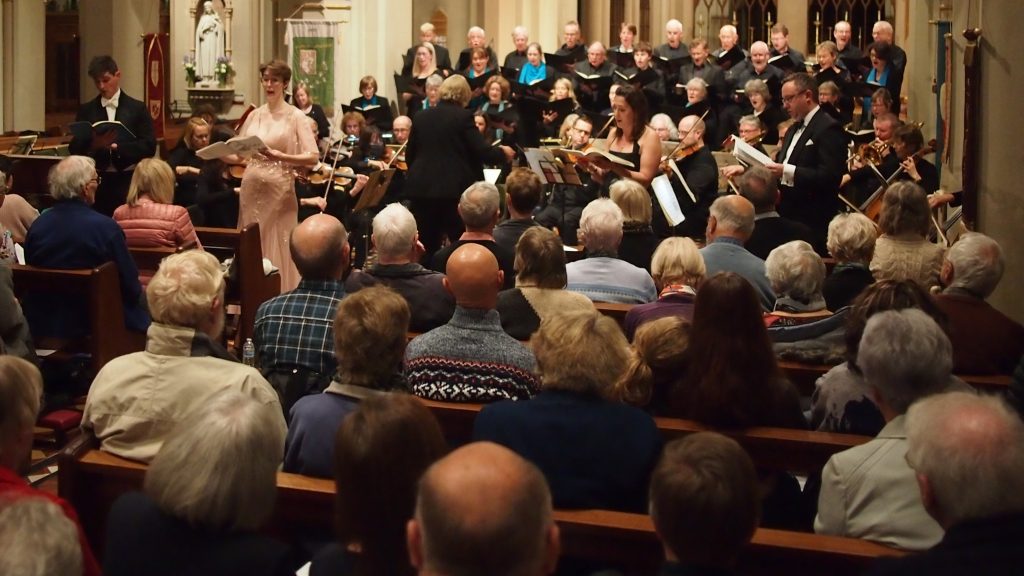
Bass Jonathan Lupton reflects on being in the audience rather than the choir for one of our performances.
Do you ever wonder what you sound like? We all hear our own voices as we sing or speak, but not in the same way that other people hear us (mainly because the sound gets to our ears via our skull bones as well as through the air). I don’t know about you, but I cringe any time I hear my own voice on a recording. And as for videos – don’t even go there!
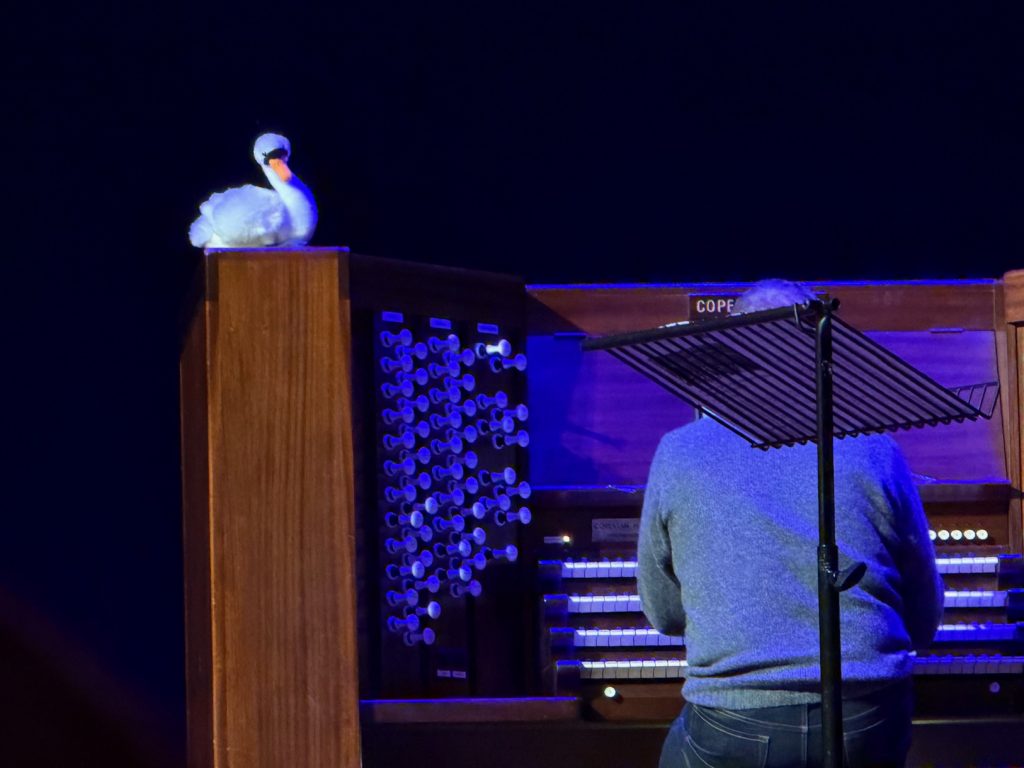
But have you ever wondered what your choir sounds like from the outside? From inside, it’s always hard to get a sense of the balance of voices – usually because you are in the middle of your fellow basses (or whatever) and the sopranos are miles away. For various reasons I was unable to be part of the choir recently, but was able to go to a concert to listen to them (us?) from the outside. It’s definitely worth sitting in the audience once in a while to hear and see what the rest of the choir both sounds and looks like.
Current choir members can relax – you sounded magnificent! A really difficult programme performed really well. But there were a couple of points that struck me – not least because they apply to me when I’m “on the inside” just as much as everybody else. One was diction, something most choirs can improve. It’s so tricky to get the balance right between making those consonants audible, yet not over-emphasised – not just at the end of words but in the middle of words too.
And the bane of conductors: choirs that don’t look up! I hadn’t realised how important this is: it’s not so much that looking up enables the choir to keep in time (although that helps!), it’s more the contact with the audience – seeing smiling faces provides an amazing lift to the whole experience for us (them!).
So whatever choir you are in, spit those words out and smile, smile, smile!
Come and see if we look up and smile in our ‘Cathedrals of Sound’ concert, St John the Baptist Church, Beeston, NG9 1EJ, Saturday 25 April 2026, 7.30pm!
Maybe something more irregular would be the right thing to put a spring in your step, or would that be a mission impossible?
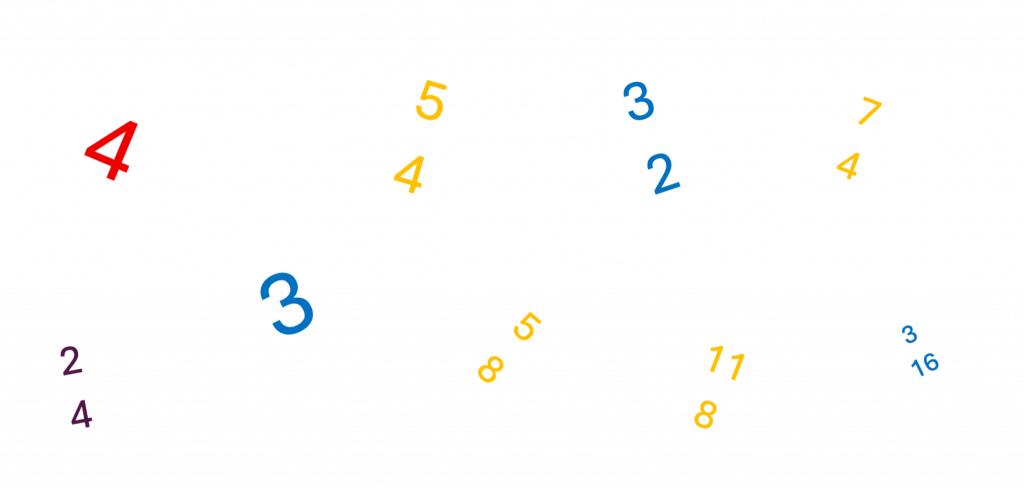
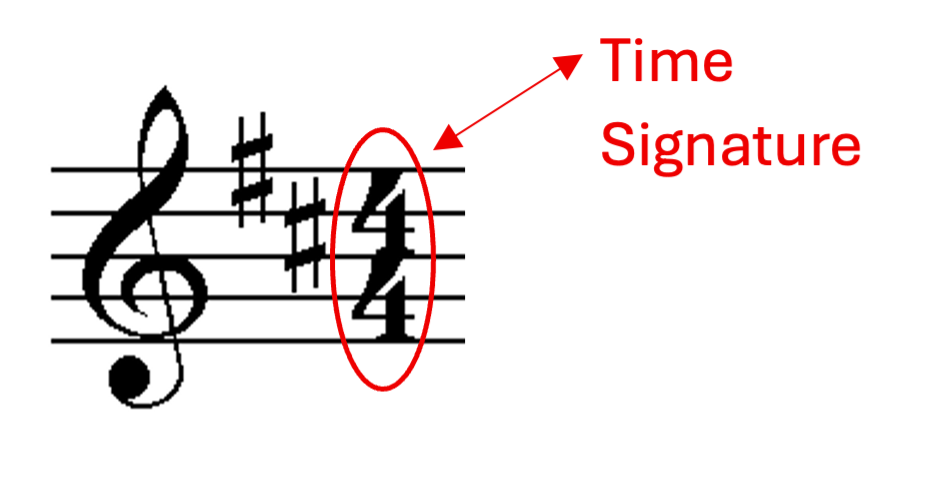
Welcome to the world of Time Signatures!
Time signatures tell us the pattern of stronger and weaker beats, accents or stresses to expect in a piece of music. If you walk to the pulse or beat of a piece in 2 or 4 time, the stronger beat is always on the same foot, for example, ‘Land of hope and glory’, ‘Ode to joy’ and Prokofiev’s ‘Dance of the Knights’ (signature tune to BBC’s The Apprentice).
Not so in 3 time where the stronger first beat will be on the left foot in one bar but right in the next. Examples include ‘Edelweiss’, ‘Moon River’, ‘Happy Birthday to you’, and less obviously ‘Jerusalem’ and ‘Bolero’.
But let’s explore the world of more unusual time signatures. Though often called ‘irregular’, that’s perhaps not the best name because they do have a regular pattern, just not regular 2, 3 or 4 time.
In last December’s Christmas is Coming concert, the massed choirs of Music for Everyone sang John Rutter’s 5/8 arrangement of the Donkey Carol, and Nottingham Chambers Singers performed a piece in 7/4, Noel by Gordon Thornett.
Years ago, I learned from textbooks that Mars, the bringer of war, from Holst’s Planets, which dates from 1914-1916, was in 5/4. However, Tchaikovsky beat him to it with the 2nd movement of his 6th Symphony in 1893. A completely different mood but still in 5/4. Earlier still, in 1874, Mussorgsky begins his promenade around the exhibition with pairs of 5/4 and 6/4 bars.
Fast forward to 1959 and the release of the punningly titled Dave Brubeck album ‘Time Out’, featuring Paul Desmond’s ‘Take Five’ and the ‘Blue Rondo à la Turk’. The latter is in 9/8 but the grouping of notes makes clear that the 9 is made up of 2+2+2+3 grouped into 4 ‘beats’ with last one longer. His ‘Unsquare Dance’ is heard regularly on TV as background music. It’s a great exercise to join in the clapping on beats 2,4,6 & 7 in the 2+2+3 pattern.
For another 7/4 try the allegro from first movement of Bernstein’s Chichester Psalms (1965). This comes after the slow introduction where the time signature changes almost every bar. The fast 7/4 feels like 3 in a bar with a longer 3rd beat, so a 2+2+3. The Beatles ‘All you need is love’ also features bars of 4/4 and 3/4 paired together.
Here’s a quote from the score to Derek Bourgeois’ Serenade, composed for his own wedding:
“Not wishing to allow them the luxury of proceeding in an orderly 2/4, the composer wrote the work in 11/8, and in case anyone felt too comfortable, he changed it to 13/8 in the middle! “
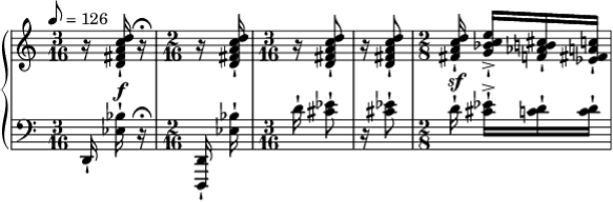
Finally to Stravinsky’s Rite of Spring where apparently the dancers found the rhythms so tricky the choreographer resorted to shouting out the counts.
Here is the ‘Sacrificial Dance’ from the work – 3/16, 2/16, 3/16 2/8!
One of the joys of music is that regardless of levels of understanding or ability to explain it, you can hear it, feel it, perform it, listen to it and love it. Music is ‘for everyone’.
Postcard from the tenor section – by another of our Rachels, Rachel Emmett.
Ruby Heddler (1890-1838) – female tenor rather than contralto!
About 20 years ago I returned to choral singing after a few years away and found my teenage second alto voice struggling at the top end. A wonderful female tenor (thanks, Jen) persuaded me to join her in the tenor section, and I have never looked back.
For any altos finding it a strain, feeling like a change, or just wanting to be needed, this postcard is for you!
Reasons to become a female tenor:
You get all the best lines (no more endless Gs and As) – tenors get some proper big tunes and some fabulous harmonies.
You can shine on all the high tenor bits when the men are struggling. The notes will be within the part of your range where you sound really good.
Don’t worry if it gets too low for you, just mime. Tenors never really have to belt out a low bit, so you can just pretend and let others sing these bits.
You will always be in demand. There is a notorious shortage of male tenors in most choirs (not NCS though) so your contribution will be much appreciated, and you might even get some interesting invites from other choirs.
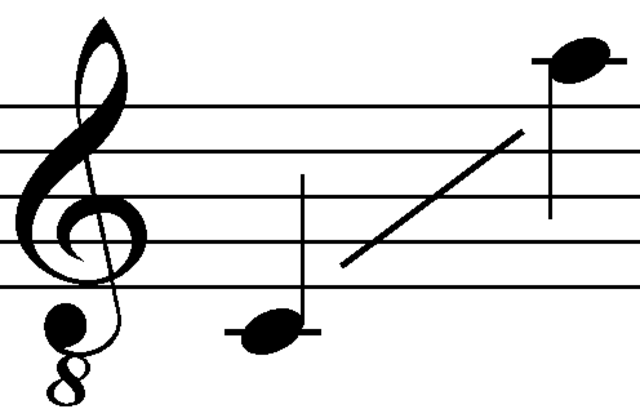
It does take a bit of time to get used to singing an octave below the printed treble clef stave, but you will adapt. Also, occasionally you have to switch to read bass clef notes, so you might need to brush up on that, but nothing you can’t handle.
Maybe give the tenor part a try at an MfE weekend, like Haydn’s The Creation,with weekend rehearsals Saturday 31 January and Sunday 1 February, and concert Saturday 7 February. Usually about one third to half of the tenors at these events are female so you’ll be in good company. And we’re all very friendly!!
We sang Cecilia McDowall’s sparkling Music of the Stars in last November’s concert. In this postcard, bass John, who is also a pianist, explores some of the composer’s piano works.
Though McDowall has written many pieces for choir, I first encountered her music through her Four Piano Solos (1999). These are a marvellously varied collection of highly imaginative miniatures, each linked to other pieces.
Shades of Solace (below) is a syncopated, moto-perpetuo making much use of the growling lowest notes on the piano and hinting at Scott Joplin’s piano rag Solace before a more obvious recollection of it.
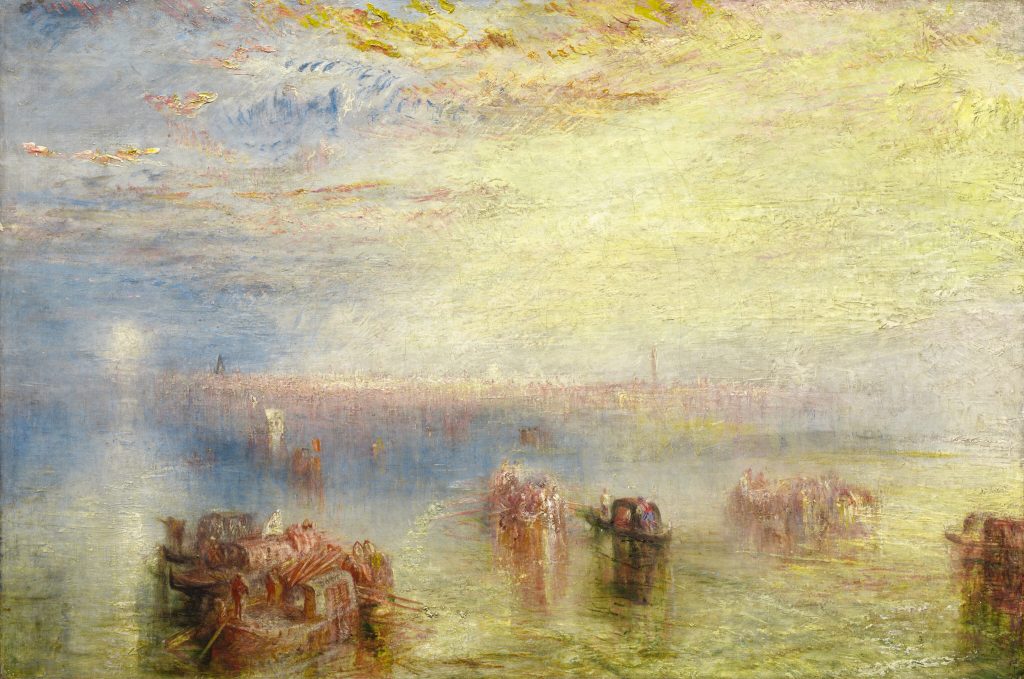
The music is misty and impressionistic – Venice is known to be foggy in the winter. One hears the rumble of low-pitched bells, a motif from Debussy’s Reflets dans l’eau, and eventually a whirlwind of ascending scales and higher pitched bells, reminiscent of the opening of Monteverdi’s Vespers,and then a more direct quote distant, high-pitched and slowed down.
Pavane – this features the old French song ‘Vive Henri Quatre’, but not as we know it. The tune is harmonised with added-note chords, the rhythm is amended to feature a number of 5/4 bars and the composer asks for much pedal.
Tapsalteerie, to quote the composer “uses James Scott Skinner’s Cradle Song in the slow, dream-like opening and later as feverish fiddle playing. Skinner’s poignant tune has been turned topsy-turvy or, as the Scots say, ‘tapsalteerie’.”
All these pieces deserve to be heard by enquiring listeners, investigated by proficient amateurs and programmed by professionals.
Soprano Rachel (we’ll leave you to guess which one) opens the New Year with some fun facts about the choir.
We’re a diverse group with diverse experiences! Some of us have been around for ages in a ‘part of the furniture’ sort of a way, others are much newer. But did you know….
Angela Kay MBE formed NCS (originally called the East of England Singers – long story!) in 1985. We celebrated our 40th anniversary season in 2024/25 with a varied series of concerts, commissioning a new work from Libby Croad, and the most uncomfortably hot concert we’ve ever sung – 33 degrees celsius! Yes, even at 40 and red as lobsters, we had a blast!
We’re part of Music for Everyone (MfE), the umbrella charitable organisation that promotes – as it says on the tin – music for everyone. Whether you can read music or not, MfE probably has something for you.
We sing all sorts! Most people hear ‘chamber choir’ and think of a particular style, but being a group of no more than 40 singers doesn’t constrain us. Our repertoire is HUGE, ranging from Hildegard von Bingen, a German abbess composing in the 12th century, right through to brand new music of the 21stcentury. We cover the lot! A jazz mass? Done that. Beatles songs as madrigals? Yes, that too. Bach? Obviously. Handel’s Messiah? Well, who wouldn’t?! Variety is the spice of life!
As already mentioned, we’ve commissioned pieces to help up celebrate special anniversaries. For our 40th, Libby Croad set to music Walter de la Mare’s poem, ‘King David’ in a beautiful work, The Nightingale. For our 25th we commissioned Anthony le Fleming to set Siegfried Sassoon’s poem ‘Everyone Sang’. Two hugely differing styles, both fantastic to sing.
And finally! For reasons that no one could possibly explain, approximately 12% of the choir rejoices in the name ‘Rachel’. It’s not compulsory to be called that, but it pretty much guarantees you’ll get someone’s attention if you shout, ‘RACHEL!’
Why have we used an image of Jelly Babies! Well, there are five of them, but they are a feature of NCS. Look out for them in a future Postcard!
World premiere of The Nightingale by Libby Croad , 12 July 2025
Our NCS ‘choiradmin’ asked members to name their favourite congregational / audience Christmas carol. A lively discussion ensued. Two postcards were planned from the contributions but as there won’t be an #MfEMondays on 22 December we’ve gone for something resembling a concertina of postcards.
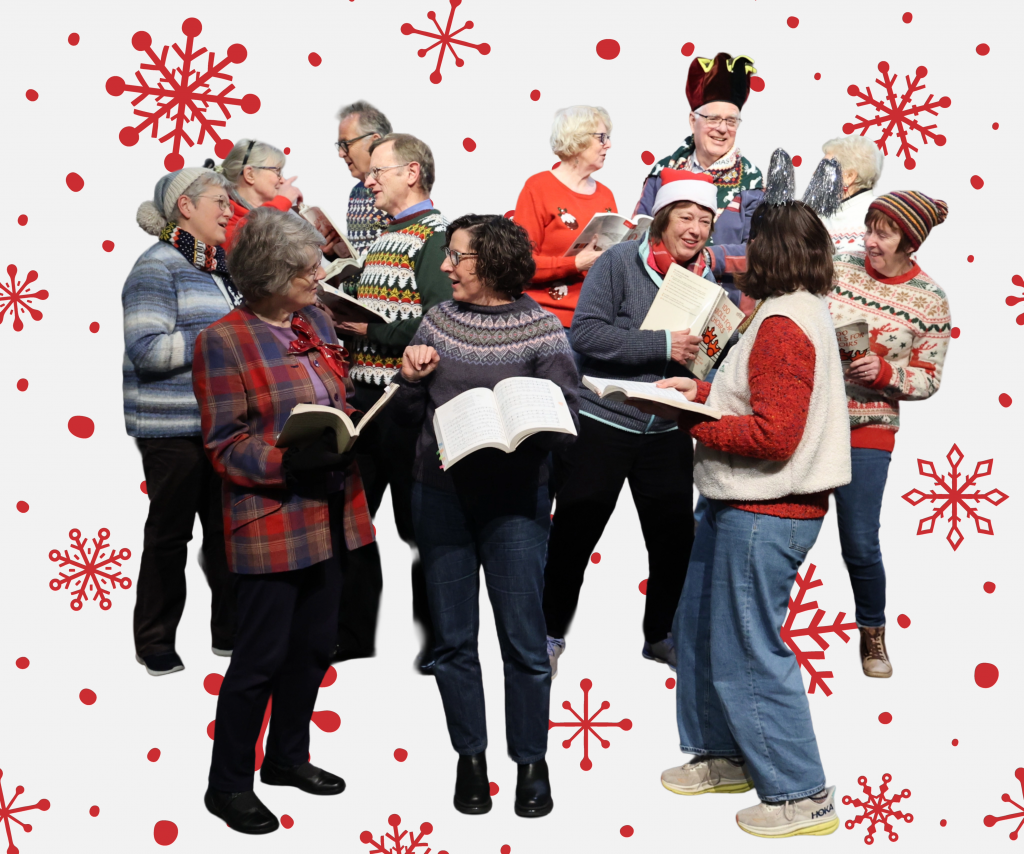
Image of some of the group who’ll be carolling at Wollaton Hall Saturday 20 December, 1.30pm
THE MUSIC
Demi: God Rest Ye Merry Gentlemen (minor key carols are the best) and In Dulci Jubilo, one of the first things I sang in a chamber choir back in school.
Robert likes pretty much every carol but agrees with Demi about the use of minor keys.
[Editor’s note: Other minor key carols include Carol of the Bells, Coventry Carol and the verses of We Three Kings.]
Stephanie: O come, all ye faithful for me every time. Shivers down my spine on the chord used for “Word”, and the fabulous descant!
Rachel P: The ‘word of the father’ chord in O come all ye faithful – but as a purist I insist it cannot be sung before Midnight Mass and must be past actual midnight…. 🤣🤣🤣
[Well, quite! “Yea, Lord, we greet thee, born THIS happy morning!”]
Angela S: Very fond of Of the Father’s heart begotten – beautifully lilting tune and uplifting thoughts.
Christine (who sings soprano): Silent Night because I like the alto part! Of the Father’s love begotten for the splendid organ accompaniment of the last verse and the words, “We were made out of love and for love”.
Rebecca: I love how the alto line in It came upon the midnight clear starts off very “one-note alto” and then goes WILD by the end of the verse.
A PUZZLE
Andy C, who used to sail a lot, picked I saw three ships but he’s always been puzzled by it given Bethlehem is landlocked! He also pictured Mary and Joseph in the first ship but wondered who was in the other two!
[Answers on a postcard to ncs@music-for-everyone.org]
MEMORIES
Ian: My daughter was born late on Christmas Eve in the City Hospital. At 8am on Christmas Day, I had her in my arms as the Salvation Army began playing Silent Night. Then I had to head home and ate beans on toast for Christmas Dinner!
Jules: O come all ye faithful for memories of the cheeky nudge with my mum at midnight mass to see if we were going to risk the descant.
[Jules typed that in the choir WhatsApp group while on hold to HMRC. Hope she was singing it when they answered!]
Rosalind: For memories as a 9-year-old singing the solo verse 1 of Once in royal David’s city in the carol service and hoping I wouldn’t go flat on “Jesus Christ her little child”.
Richard: Torches – I’ve always loved it, fond memories of singing it as a choirboy aged 8.
THE MESSAGE
Andy F: In the bleak midwinter, the words of the last verse ‘What can I give him… What I can I give him, Give my heart.’ bring us to the very meaning of Christmas and my faith. Ange F and Ruth agreed.
Denise: I’m with Andy – have always loved In the bleak because of the last verse!
Robert: Likewise, and the last verse of O little town of Bethlehem – “Cast out our sin and enter in; be born in us today.”
Janice: In the bleak midwinter and the Sussex Carol for its sheer joyousness on the birth of Christ.
John: O come, O come Emmanuel. That longing we have for rescue, relief, deliverance or liberation when things are tough for us or those we love, and for those we don’t even know.
Rachel P: It came upon a midnight clear especially the words in the second verse ‘still through the cloven skies they come with peaceful wings unfurled, and still their heavenly music floats o’er all the weary world’. The descant is special too.
ENTERTAINING
[There’s always one, or maybe two, or…]
Jezz: It has to be The Cowboy Carol, followed by L.D. “L.D?” asked choiradmin. “Little Donkey,” came the reply!
Iain: Gabriel’s Message – when “most highly favoured lady” is ‘accidentally’ sung as “most highly flavoured gravy”!
Robert: Quelle est cette odeur agréable – aka The whiffy carol.
A UNIVERSAL LANGUAGE
Mags: I love the beautiful carols that are singable in German as well as English so I can share them in harmony with my German family, my favourite being Stille Nacht, though O Tannenbaum is fun!
Val: I’d go with Stille Nacht, too. So soothing at this time of year.
OTHER FAVOURITES
Rachel B: The Coventry Carol and Jesus Christ the apple tree. Sue: See amid the winter’s snow. David S: For me, O Holy Night beats everything.
The opening movement of Bach’s Christmas Oratorio was suggested several times!
[We excel at deviation! While I’m here, Hely Hutchinson’s A Carol Symphony takes me back to bread skewered on a toasting fork browning before the log fire in my aunt’s sitting room. Germina would like to add how Fantasia on Christmas Carols truly begins her Christmas.]
And the most popular audience / congregational Christmas carol in NCS is…
It looks like O come all ye faithful takes third place, with Silent Night a close second. By a whisker – and where’s the little drummer boy when you need him – the top spot goes to In the bleak midwinter.
We sang this choir favourite during MfE’s Christmas is Coming concert in an arrangement by Gjeilo of Holst’s beautiful tune:
Nottingham Chamber Singers wish you a Merry and Carol-filled Christmas!
Here are two lovely carols for you that we recorded in recent years, both in arrangements by that carol composer extraordinaire, John Rutter:
Sans Day Carol, arr. Rutter
Here we come a-wassailing, arr. Rutter
Notes:
A group of us will be singing carols in QMC main entrance 10.30am Monday 15 December, and another group at Wollaton Hall, Saturday 20 December between 1.30 and 3.00pm. Free entry. Scroll down the linked page for information: https://wollatonhall.org.uk/christmas/
If you were at Nottingham’s Royal Concert Hall on Monday 1 December for Tenebrae’s concert, you might have bumped into many present and past members of Nottingham Chamber Singers. The evening’s performance inspired soprano Annie to pen this week’s Postcard from the Choir.
It can be very intimidating joining a new choir where everyone seems to have known each other for years and is able to sing everything easily as they have done it before. That is how it was for me when I joined NCS (EOES) nine years ago.
I quickly discovered that these intimidating people were friendly and welcoming and I am now fortunate enough to join some of them at performances of the wide range of classical music Nottingham has to offer.
This week a group of us were excited to go and hear the wonderful Tenebrae who were visiting the Concert Hall with their Christmas programme, ‘In Winter’s House’.
(Imagine there’s a selfie here of some smiling NCS sopranos waiting for the concert to begin. We did take a photo but only Rachel H’s teeth were in focus and we didn’t think she’d thank us for posting it!)
What a breathtaking performance from Tenebrae! Precision accurate without losing any emotion or beauty.
All the singers have impressive solo voices, and when they come together as a choir the sound is glorious. I could continue with many superlatives! The highlight for me was Britten’s Ceremony of Carols for upper voices and harp accompaniment. They made it sound effortless. It isn’t – we’ve sung it!
The most beautiful sound to me is the sound of the human voice and I am grateful that these wonderful singers choose to share their gift with us and, in doing so, make the world a better place!
Annie shares her favourite item from the programme – Tenebrae singing ‘As Dew in Aprille’ from Ceremony of Carols.
Tenebrae are directed by Nigel Short, a former King’s Singer.
NCS = Nottingham Chamber Singers, formerly EOES = East of England Singers.
Why, you may ask, am I writing a Postcard from the Choir about the nickname of an elephant?
‘Jumbo’, is the self-storage company where items belonging to MfE, including music sung by Nottingham Chamber Singers, are kept in three units.
Wednesday afternoons are when Ang (Angela Kay MBE!) and I meet in Jumbo to whip hundreds of pieces of choral music into shape. The unit is filled with yards of shelving full of music in plastic bags and box files. Other copies are in carrier bags used to transport music between Jumbo and the MfE Office. There is a green plastic garden table to put music on and a few wobbly chairs.
We lug boxes, check the contents correspond to the labels and categorise the music into a) something one of the MFE choirs might sing again, b) something no one will ever sing again, or c) so browned with age that it needs to go. Our alphabetic skills are then tested until one of us recites the alphabet out loud to ensure ‘Au’ goes before ‘Av’, etc.
Ang building a new set of shelves, hindered by me not knowing one end of a screwdriver from the other!
You might be wondering why we do it. Music copies are the life blood of all MfE groups, so they need looking after. We do try to get the music in order, but perhaps more importantly we have a good laugh – we’ve been friends for 50 years having met at college.
After a couple of hours we decide our brains are addled and we’re tired. We escape from Jumbo and head home for a lie down in a darkened room, safe in the knowledge that there is at least some order to the music, making it easier for conductors to find exactly what they’re looking for.
Buy a ticket for our next concert – St John’s Church, Carrington, 7.30pm, Saturday 29 November.Click here
Nearly! We bet you’ve said or heard that on many car journeys, often when going on holiday!
It’s a long way to Switzerland!
Our autumn concert seemed far off in September, now suddenly it’s but a few days away! Saturday 29 November, 7.30pm, St John’s Church, Mansfield Road, Carrington, NG5 2DP.
While we enjoy singing for ourselves, nothing compares with the joy of giving a concert. But what does ‘giving a concert’ entail and mean?
Planning starts months before we begin to rehearse the music. A venue comfortable enough for an audience, with space for our number and a good acoustic is found. We think about parking, heating, refreshments, tickets and programmes as we want the evening to be welcoming.
St John’s, Carrington – new seating!
The conductor selects a cohesive programme of music that suits the venue, offers interest and difference to the listener and is enjoyable for choir and audience alike. Music copies are hired, bought or drawn from the MfE library. Publicity is designed, tickets are made, marketing begins.
Rachel, who is conducting the concert, prepares her interpretation of the works and conveys this to us as we learn the notes, phrases and harmonies, tempi and dynamics, the words and meaning of the texts, how to blend with each other to sing as an ensemble, a choir of interconnecting and interweaving voices in sync and sympathy with each other.
All being well, personal practice and Wednesday rehearsals enable us to reveal the heart and soul of the music to the listener. While the performance is fromus, it is foryou – our new and regular audience friends.
We very much hope you’ll come and we look forward to seeing you on Saturday if you do. Booking in advance is recommended, but tickets are usually available on the door. The programme has wonderful melodies and harmonies, with poignant and intriguing words – listen out for ‘astrophysicists’!